Dining Table and Chair Silhouettes
A Quiet, Confident Statement for Kitchen & Home Goods
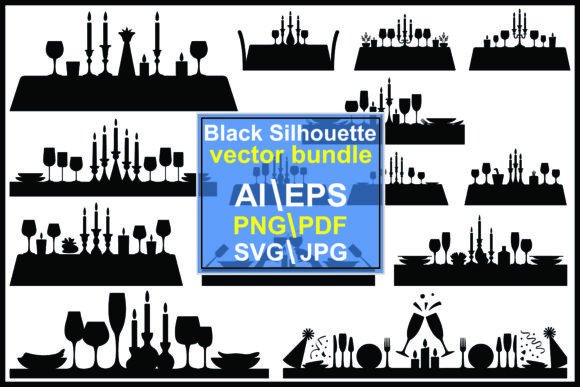
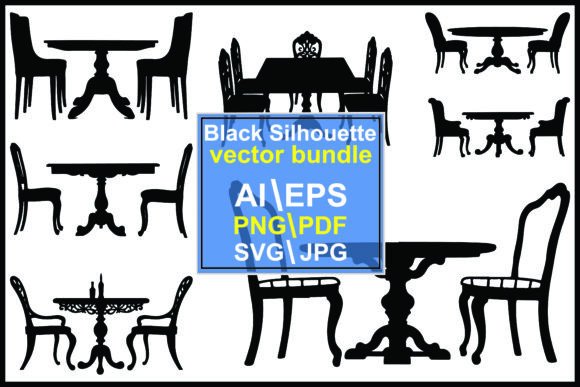
First impression? Clean. Calm. Thoughtfully composed. Dining Table and Chair Silhouettes doesn’t shout — it settles in like a well-worn apron or a favorite ceramic mug. These aren’t cartoonish or overly stylized; they’re precise, balanced silhouettes — round tables with subtle leg curves, rectangular ones with clean lines, chairs ranging from simple ladder-backs to gently ornate profiles. The black-on-white foundation gives immediate versatility, and the collection’s variety (shapes, sizes, groupings) feels intentional, not cluttered. As an embroidery designer who’s stitched hundreds of home-themed pieces, I immediately saw where this would land: on tea towels folded neatly at a boutique counter, centered on a linen pillow cover for a modern farmhouse nursery, or scaled down as a delicate accent on a baby onesie.
Where It Shines in Real Embroidery Projects
I tested Dining Table and Chair Silhouettes across three real production scenarios: a medium-weight cotton tote bag for a local kitchenware shop, a soft French terry sweatshirt for a holiday gift line, and a set of 4-inch square linen patches for a craft fair vendor. In every case, the design held up beautifully. On the tote, the larger table silhouette (about 3.5" wide) stitched crisply with moderate fill stitch density — no puckering, no thread breaks. On the sweatshirt, I used a lightweight cutaway stabilizer and chose a slightly smaller chair motif (2.2") — it read clearly even with the fabric’s subtle nap. And those patches? Perfect. The clean outlines translated directly into sharp satin-stitched edges, ideal for iron-on backing or sewn appliqué.
This is exactly the kind of machine embroidery design that elevates a handmade product without demanding technical gymnastics. It works naturally for custom apparel, tote bag design, pillow covers, and kitchen towel embroidery — especially when you want warmth and sophistication over whimsy. Etsy sellers will appreciate how easily it fits into cohesive collections: pair it with simple script fonts (“Gather,” “Home Is Where the Table Is”) or subtle botanical accents. For holiday embroidery or wedding gifts, it reads as timeless, not seasonal — think monogrammed napkin sets or embroidered coasters.
Where to Pause — Not Problems, Just Practical Checks
Like any strong embroidery file, Dining Table and Chair Silhouettes rewards thoughtful application. On very small hoops (under 3"), some of the more intricate ornate chair details may lose definition — test first. On textured fabrics like bouclé or heavy burlap, stick to the bolder, simpler silhouettes (the round table, basic ladder-back chair) rather than the finest-lined versions. With stretchy knits or thin voile, use a firm tear-away + light cutaway combo and reduce stitch density slightly — the clean lines can emphasize distortion if the fabric isn’t fully supported.
Dark fabric backgrounds demand attention: while the design is built for contrast, always check your thread color against the base. A matte black thread on charcoal denim reads richly; a glossy rayon might look washed out. And on curved surfaces — like the front panel of a cap — avoid placing the most complex multi-piece groupings. A single, centered chair or compact round table works best there. Also note: this is a Graphics-class Illustrations set — so it’s optimized for clarity, not dense texture. Don’t expect heavy satin borders or layered fills unless you modify it yourself.
What It Adds to Your Finished Product — Beyond Stitching
Dining Table and Chair Silhouettes quietly boosts perceived value. Customers recognize craftsmanship in clean lines and confident negative space — it says “designed,” not “downloaded.” That translates directly to trust, especially for personalized gifts or small shop products. When someone sees this on a hand-embroidered tea towel, they don’t just see a table — they feel intention, care, and a quiet nod to daily ritual. For commercial embroidery clients (think cafes, catering companies, wedding planners), it supports brand consistency without being literal or limiting. And because it’s inherently versatile, it scales gracefully — from a tiny 1.2" motif on a baby bib to a bold 4.5" statement on a market apron.
Designer Notes You’ll Actually Use
- Always test on scrap fabric — especially with your exact stabilizer and thread combo. What looks crisp on screen isn’t always what stitches.
- Review stitch density before hooping. If your machine struggles with tight fills, simplify minor interior details manually.
- Confirm hoop size compatibility — the collection includes various shapes and sizes, so match each motif to your most-used hoop.
- Inspect small corners and joins — ornate legs or curved table edges should be smooth, not jagged, after stitching.
- Test in black-and-white mockups — this design lives in high contrast, so verify readability on both light and dark backgrounds.
- Use proper stabilizer — medium-weight cutaway for stable wovens, tear-away + light cutaway for knits.
- Verify licensing — since this is a digital embroidery file, confirm whether your intended use (e.g., selling finished embroidered items vs. reselling the file itself) aligns with the terms.
In short: Dining Table and Chair Silhouettes is a grounded, flexible, and quietly elegant design asset. It won’t wow with flash — but it will earn repeat orders, spark customer compliments, and sit comfortably at the center of thoughtful, well-made work. Whether you’re building a craft business, prepping for a printable mockup portfolio, or stitching your next personalized gift, this collection earns its place in your working library.