One Continuous Line Design of Mouth Graphics & Illustrations
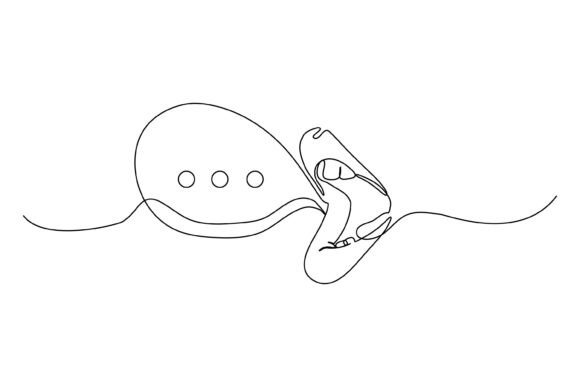
When I downloaded the One Continuous Line Design of Mouth file, I was immediately curious how it would behave across a real product lineup. The asset is described as one continuous line drawing of a mouth paired with a speech bubble, plus a handful of decorative details placed on a clean white background. The download includes EPS, SVG, and JPG formats. For a digital seller like me, that combination of formats is a practical starting point. The vector files give me the flexibility to scale and recolor, while the JPG gives me a quick raster preview. Right away, I started thinking about where this illustration could slot into my existing shop and what kind of buyer it would attract.
The style is unapologetically minimal. The linework is thin and airy, with a slightly playful rhythm. The speech bubble turns the mouth into a conversational symbol, so it already feels at home in communication-themed products. The extra decorative elements—small dots, tiny stars, or subtle accents—add a hand-drawn charm without pulling the design into a childish or overly cutesy territory. I’d describe the mood as modern, slightly whimsical, and gender-neutral enough to work across multiple niches. It’s not loud, not bold, and not rustic. Instead, it leans into a clean, contemporary aesthetic that Etsy shoppers often associate with quote art, mental health awareness, self-expression, or even minimalist branding.
Who This Graphic Speaks To
I immediately saw this working for sellers who build products around words. A speech bubble plus a mouth is a visual shorthand for “voice,” so it naturally pairs with motivational quotes, podcast promotion, blog graphics, and social media templates. Content creators who sell Canva templates or digital planners could use it as a repeating motif. The line art style also fits the current demand for neutral, skin-tone-agnostic body part illustrations seen in modern wall art collections. It’s decorative without being overly feminine or masculine, which makes it a safe bet for a broader audience.
For a print-on-demand seller, the question is always whether a design can hold its own on a t-shirt, mug, or tote bag without needing extra elements. This one might need a companion quote or a bold typographic pairing to fully command a garment. But as part of a bundle with other line art faces, lips, or speech elements, it could become a versatile staple. I tested it inside a mockup for a minimalist tote bag, and the simplicity actually worked well—it gave off a quiet, artsy vibe that felt premium.
Testing the Design for Real Product Creation
Before publishing any listing, I always run a new asset through a few real-world scenarios. Here’s exactly how I tested the One Continuous Line Design of Mouth and what I found.
First, I opened the SVG in Adobe Illustrator to inspect the paths. The line was genuinely continuous, with clean nodes and no unexpected breaks. That’s crucial for Cricut users who need a smooth cut without jagged edges. The speech bubble was a simple rounded shape, and the decorative elements were separate, so I could remove or resize them easily. The EPS opened without issues, preserving all layers. The JPG was high resolution—300 DPI at a decent size—but remember, it’s on a white background, so it lacks transparency. For print-on-demand, you’ll want to export a transparent PNG from the vector files. I did that in seconds, and the result was a crisp, clean silhouette.
Next, I placed the design on a few mockups: a white mug, a dark heather gray t-shirt, a kraft paper sticker sheet, and a framed wall art preview. On light backgrounds, the thin black line looked elegant and intentional. On the dark shirt, the line disappeared entirely because the default stroke was black. That’s an easy fix—just invert the color to white—but it’s a step sellers need to remember. I also tested it as a small sticker detail. At about 1.5 inches, the fine line started to lose clarity, and I worried about cutting precision. For tiny sticker sheets, I’d either thicken the stroke slightly or use this design only at larger sizes.
For sublimation, the SVG worked perfectly. I imported it into a design for a ceramic mug, paired it with a handwritten script font that said “Speak Your Truth,” and the result looked like a cohesive, sellable product. The decorative elements around the speech bubble added just enough interest without cluttering the layout. That’s a balance I’m always chasing—too much detail, and the thumbnail becomes a blur; too little, and the product feels incomplete.
Where This Illustration Performs Best
Based on my tests, I’d confidently use this graphic design asset in the following contexts:
- Printable wall art—especially when paired with a serif or script font for a motivational quote.
- Canva template elements—the speech bubble adds a ready-made frame for text, making it a natural fit for social media graphics, blog featured images, and digital download covers.
- T-shirt and tote bag designs—as long as the line color is adjusted for contrast, the minimal look works on apparel.
- Greeting card and invitation templates—the conversational tone suits save-the-dates, birthday invites, or “just because” cards.
- Product mockups—sellers can overlay this design on blank product photos to enhance visual storytelling and perceived value in listing images.
- Digital paper packs and scrapbooking kits—the illustration can be repeated or scattered as a subtle pattern.
- Seasonal bundles—think Valentine’s Day, mental health awareness, or self-care themed collections where a “voice” symbol resonates.
In each of these scenarios, the design’s simplicity becomes its strength. It doesn’t compete with other elements; it supports them. This makes it a strong candidate for sellers who want to maintain a cohesive brand identity across multiple product types.
Where You Need to Be Cautious
No asset is perfect for every application, and this one has a few specific limitations I noticed.
First, the fine line thickness. On a Cricut machine, cutting a continuous line that’s hair-thin can lead to tearing or incomplete cuts, especially with intricate decorative dots. I’d recommend testing a cut file on cardstock before committing to a full sticker run. If the line is too delicate, you can use a stroke outline or slightly offset the path in your cutting software. For Silhouette users, the same caution applies.
Second, the white background JPG is not a transparent PNG. I’ve seen sellers mistakenly upload a white-background JPG to print-on-demand platforms, expecting a transparent result, only to end up with a white box printed on their shirt. Always convert the vector to a transparent PNG first. The EPS and SVG give you the raw material, but you need to do the export step.
Third, this design doesn’t work well on heavily textured or dark backgrounds without modification. The default black line will vanish. If you plan to sell it as part of a commercial license package, include a note for your buyers about stroke color customization. That small touch can reduce support messages.
Finally, avoid using it in layouts where the speech bubble is forced to carry very small text. The bubble is not huge, and if you cram a long quote inside, the line art will get lost. Pair it with a statement word or short phrase, and let the illustration breathe.
Packaging the Asset for Your Own Customers
If you’re a digital product creator who resells or bundles graphics, how you organize and present the files matters. I’d rename the EPS, SVG, and JPG files clearly—something like Mouth-Speech-Bubble-Continuous-Line.svg rather than leaving a cryptic code. For a commercial license, I’d also include a quick usage guide PDF that shows the design on a mockup, explains the color change process, and reminds buyers to test cuts. This extra step increases perceived value and reduces refunds.
When creating a product listing on Etsy or Creative Fabrica, the thumbnail is everything. I’d feature this illustration on a clean, light mockup as the main image—maybe a framed art print or a crisp white t-shirt. The second image could show the speech bubble enlarged with a sample quote. The third might display the decorative details up close. That visual hierarchy tells a story: first the lifestyle, then the function, then the craftsmanship.
I’d also consider bundling this mouth design with other continuous line faces, hands, or abstract shapes. A design bundle that offers a consistent line art style is far more appealing than a single asset. Sellers who create digital downloads, planner stickers, or Canva templates often buy in packs, and this illustration fits perfectly into a growing collection of modern, minimal graphics.
Final Seller Notes Before You Publish
After a full round of testing, here’s my honest take for fellow shop owners. The One Continuous Line Design of Mouth with speech bubble and decorative elements is a solid, versatile illustration that fills a specific niche: communication, self-expression, and modern minimalism. It’s not a standalone hero design for a t-shirt, but it’s an excellent supporting element for larger products. The file quality is clean, the vector paths are well-executed, and the decorative accents add a touch of personality without overwhelming the design.
For the price, it’s a practical addition to a digital seller’s toolkit. Test it on physical mockups, check the cut quality if you’re marketing to Cricut users, and always provide a transparent PNG version in your customer folders. Pair it with a strong typographic choice—whether a bold sans serif, an elegant serif, or a flowing script font—and you’ll have a product that feels intentional and market-ready.
If you’re building a seasonal collection around conversations, quotes, or mental health, this design earns its place. Just remember to verify your commercial license terms before you use it on merchandise you plan to sell, and always offer clear, organized files to your buyers. That attention to detail is what separates a professional online shop from a hobbyist side hustle.