Rose Silhouette Bundle
A Designer’s First Impression: Clean, Quiet, and Surprisingly Versatile
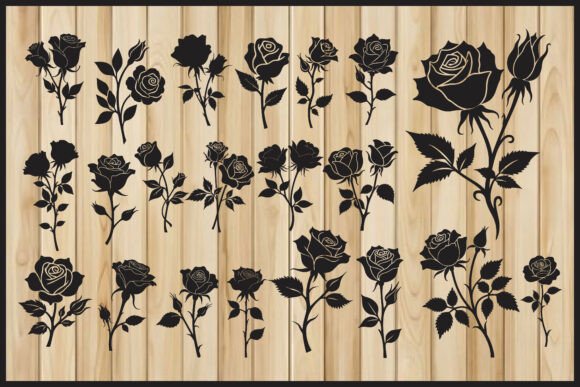
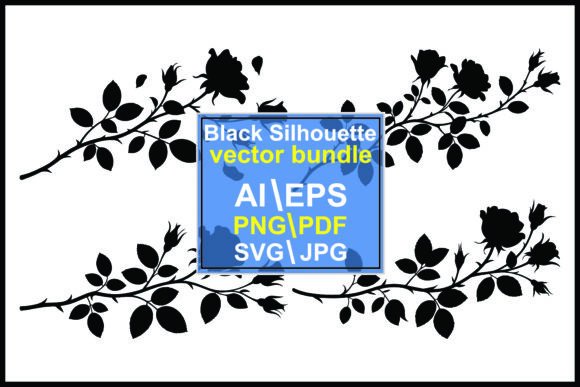
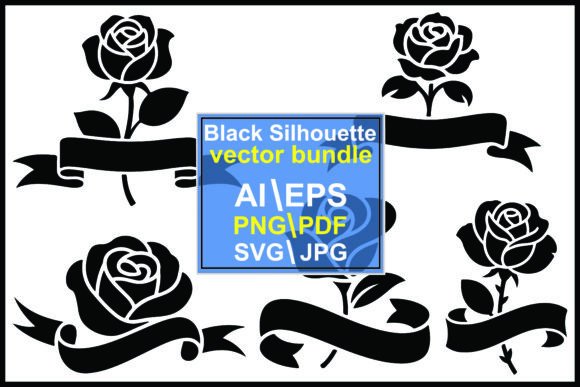
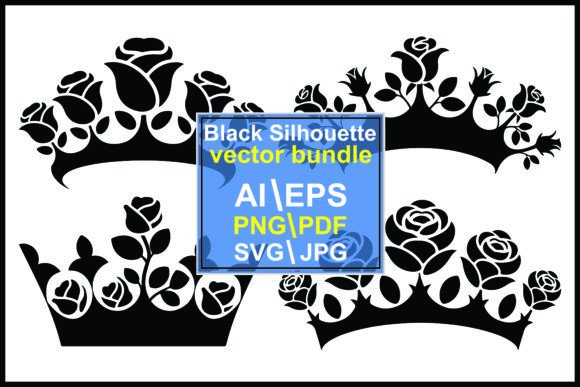
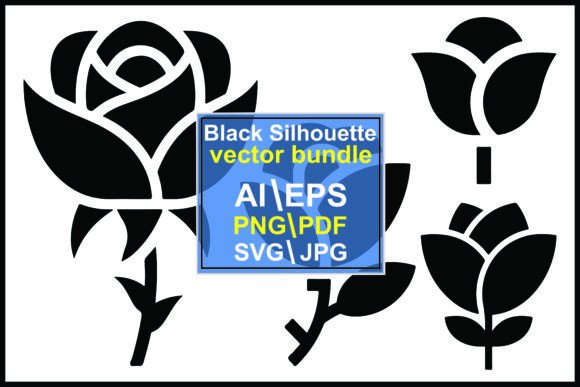
When I opened the Rose Silhouette Bundle, I wasn’t met with ornate petals or dramatic shading—just confident, fluid outlines of black rose forms: single blooms with stems, clustered sprigs, and standalone icons. The mood is calm but intentional—minimalist without feeling sterile, botanical without leaning into cliché. There’s a quiet elegance here that reads as mature, thoughtful, and quietly luxurious. It doesn’t shout; it invites closer looking. That’s rare in silhouette-based embroidery assets—and exactly why this bundle stood out while prepping for a custom embroidered tote bag launch for a local boutique.
How It Stitches: Clarity Over Complexity
In real embroidery use—especially on midweight cotton canvas (think tote bags, tea towels, aprons)—the Rose Silhouette Bundle delivers clean, legible results with minimal fuss. Because these are true silhouettes—not filled florals—they rely heavily on crisp edge definition. That means stitch density matters less than line integrity. I ran test stitches on unbleached linen, brushed cotton, and a lightweight sweatshirt fleece. On stable, tightly woven fabrics with light- to medium-weight cutaway stabilizer, the stems held their taper, leaf points stayed sharp, and the curves of each bloom retained their grace—even at 3.5" wide.
Where it shines most: custom apparel (sweatshirts, crewnecks), embroidered patches, pillow covers, and kitchen towels. The simplicity translates beautifully to stitching—fewer satin-stitch transitions, no dense fill areas that risk puckering, and generous negative space that lets fabric breathe. For baby embroidery or nursery decor, the gentle scale and lack of fussy detail make it feel safe, soothing, and intentionally unhurried.
Real-World Fit: Where This Bundle Earns Its Keep
Last month, I used one of the smaller stem-and-bloom icons (about 2.75") on a set of organic-cotton tea towels for a craft fair. Customers didn’t just see “a rose”—they paused. They commented on how “modern” it felt next to vintage-style kitchen linens, how it balanced tradition with restraint. That’s the quiet power of this collection: it supports storytelling without dominating it. As an Illustrations asset, it works equally well as a standalone motif or layered subtly behind monogrammed initials in a printable mockup for an Etsy seller’s digital embroidery file listing.
It also holds up across product types where visual hierarchy matters: on a curved cap front, the simplified shape avoids distortion; on a stretchy knit onesie, the open negative space minimizes tension pull; on a dark denim apron, a white-on-black thread combo made the design pop without needing underlay-heavy fills. For holiday embroidery or wedding gifts, pairing it with fine metallic thread (gold or rose gold) adds subtle warmth—no redesign needed.
Where to Proceed With Care
This isn’t a one-size-fits-all embroidery file. Its strengths are its limits, too. Avoid using the most intricate sprig variations on tiny hoop sizes (under 3"), especially if stitching on thin fabric like voile or rayon challis—fine stem lines can blur or break. On highly textured fabrics (bouclé, heavy terry, or quilted cotton), simplify further: choose the boldest single-bloom icon over multi-element arrangements. And on dark fabric, confirm your thread color contrast early—black-on-black won’t read, and some off-whites lose definition against charcoal or navy.
Also worth noting: because these are pure silhouettes, they don’t include built-in applique layers or decorative stitch accents. If your brand relies on texture (like chenille or puff embroidery), you’ll need to adapt manually—or treat the Rose Silhouette Bundle as a refined base layer beneath additional elements.
What It Does for Your Craft Business
For an Etsy seller or small shop product creator, this bundle elevates perceived value without increasing production time. A single-stitch rose on a linen pillow cover reads as intentional, not basic. It signals care in curation—not just speed in execution. Customers associate that restraint with quality handmade product standards, which builds trust faster than busier designs ever could.
From a branding perspective, the consistency across icons makes it easy to maintain visual cohesion across collections—say, matching tea towels, aprons, and gift tags for a botanical-themed shop. And because it’s rooted in nature but executed with graphic clarity, it avoids seasonal fatigue. You won’t need to retire it after Valentine’s Day or Mother’s Day.
Practical Designer Notes Before You Stitch
- Always test first—on scrap fabric *with the exact stabilizer and thread you’ll use*.
- Check small details at actual stitch-out size: do stem tips hold? Do leaf notches read clearly?
- Review stitch density: even simple silhouettes can over-stitch if auto-digitized poorly—look for smooth, continuous outlines, not jagged or double-traced edges.
- Confirm hoop size compatibility—some icons may require repositioning for 4x4 hoops.
- Test both black and white thread on light and dark backgrounds—contrast shifts dramatically depending on fabric tone and sheen.
- Use appropriate stabilizer: cutaway for knits and stretchy fabrics, tear-away for stable wovens.
- Verify licensing terms before selling finished products or bundling the Rose Silhouette Bundle into your own digital embroidery file packs.
- Remember: as Graphics, these work best when treated as intentional design assets—not filler. Let them breathe. Give them space to speak.
Final Thought: Less Is Anchored, Not Empty
The Rose Silhouette Bundle doesn’t try to be everything. It’s not a floral explosion. It’s not a hyper-detailed botanical study. It’s a focused, repeatable, stitch-friendly expression of rose form—quietly confident and deeply usable. Whether you’re embroidering a personalized gift for a new parent, building a cohesive line of boutique merchandise, or adding subtle sophistication to your next craft fair booth, this bundle earns its place in your working library—not as decoration, but as design infrastructure. It’s the kind of asset that makes your process smoother and your finished product feel more considered. And in handmade work, that’s everything.