Silhouette Garden Archway
A Quiet, Confident Statement—Not a Filler Graphic
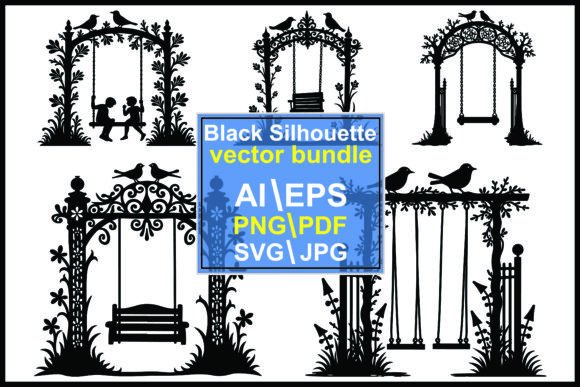
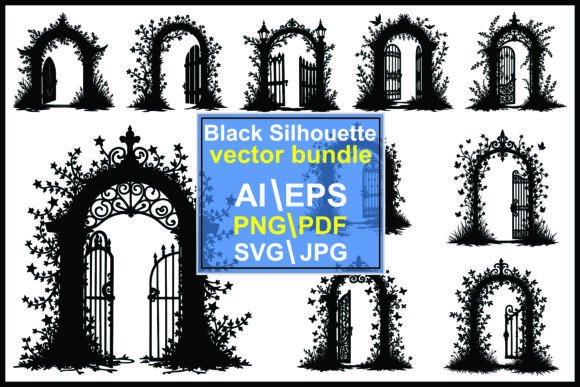
First impression? Silhouette Garden Archway doesn’t shout. It breathes. That black-on-white garden archway—curved, open, framed with birds perched lightly on its crown and flanking gate posts—feels like a well-worn sketch from a vintage botanical journal. There’s no floral clutter, no busy background, no forced symmetry. Just clean lines, intentional negative space, and a gentle rhythm between structure (the arch) and softness (the birds’ silhouettes). As an embroidery designer who’s stitched hundreds of motifs for client projects and small shop merchandise, I immediately saw it not as “just another illustration,” but as a quiet anchor—a design that could carry weight without overwhelming.
Where It Lives Best: Tote Bags, Nursery Pillows, and Thoughtful Gifts
Last week, I prepped a custom order: a linen tote bag for a local florist’s pop-up stall. She wanted something elegant but unpretentious—no script fonts, no cutesy bunnies, nothing too literal. Silhouette Garden Archway landed perfectly at 4.5" wide, centered on the front panel. Stitched in matte black thread on natural linen with medium-weight cutaway stabilizer, it held its shape crisply. The arch’s curve echoed the tote’s rounded handles; the birds added just enough life without tipping into whimsy. Customers paused. They didn’t just glance—they *noticed*. That’s the difference between decoration and resonance.
It works equally well on baby pillow covers (stitched in soft cotton thread on brushed cotton), tea towels (where its graphic clarity reads even from across a kitchen), and minimalist sweatshirt backs (especially on heather grey or oatmeal—no need to hide it under color). For Etsy sellers building a cohesive brand around nature-adjacent calm—think herbal apothecaries, slow-living journals, or botanical stationery—the Silhouette Garden Archway is a rare find: a ready-to-use design asset that feels curated, not stock.
Where to Pause—and Why
This isn’t a one-size-fits-all embroidery file. Its strength lies in its simplicity, but that also sets clear boundaries.
- Small hoop sizes (under 3.5"): The gate posts and arch curve lose definition. Birds become blobs. Test at 3" first—even if your machine allows smaller, the design needs breathing room.
- Textured or stretchy fabrics: On slubbed linen or lightweight jersey, the clean lines can blur. Use tear-away + light cutaway stabilizer, and reduce top tension slightly to prevent puckering.
- Dark or heavily patterned backgrounds: Since it’s a black silhouette, contrast matters. On navy or charcoal, switch to cream or off-white thread—or invert the concept: stitch the *background* in black and leave the archway as negative space (requires digitizing adjustment).
- Curved surfaces (caps, curved apron pockets): The arch’s smooth curve adapts better than angular motifs, but avoid placing it directly over seams or high-stretch zones without testing seam allowances and fabric drape.
What It Adds—Beyond Aesthetics
Using Silhouette Garden Archway in a finished product quietly elevates perceived value. Because it’s graphic—not illustrative—it reads as intentional design, not craft-store clipart. That builds customer trust: buyers assume care was taken in selection, not just speed. For handmade product sellers, that translates to higher willingness to pay, stronger repeat engagement, and better photo mockups (it photographs cleanly, even on phone cameras).
It also supports brand consistency. Unlike floral bouquets or seasonal motifs, this design doesn’t date. It fits spring launches and winter gifting equally. And because it’s black and white, it scales effortlessly across product types—same file used for a patch, a tea towel, and a printable packaging sticker. No re-coloring, no licensing guesswork (though always confirm commercial use rights before listing digital embroidery files or reselling stitched items).
Practical Designer Notes—Before You Stitch
- Test on scrap fabric first—especially if using textured or dark material. See how fill stitches settle and whether running stitch outlines stay crisp.
- Check thread color contrast in natural light. Black thread on black fabric? Not legible. Off-white on ecru? Might disappear. Hold a swatch up to your intended background.
- Review stitch density. This is a graphic silhouette—so fill areas should be moderate, not dense. Overly heavy stitching will stiffen lightweight fabrics and obscure detail.
- Confirm hoop size compatibility. If you’re working with a 4"x4" hoop, aim for a max width of 3.75". Don’t stretch the design to fit.
- Inspect small details: the gap between gate posts, the curve of each bird’s wing. If those vanish in stitching, simplify or adjust density—not the design itself.
- Mock it digitally in both light and dark contexts. Use free tools like Canva or your embroidery software’s preview mode. Does it hold presence on a cream sweatshirt? On a charcoal apron?
- Use appropriate stabilizer. Medium cutaway for stable fabrics (linen, denim, twill); tear-away + light fusible for knits or delicate cottons.
- Verify licensing. As an Illustrations asset marketed for commercial use, double-check whether resale of stitched items or redistribution of the digital embroidery file is permitted—especially if you’re an Etsy seller offering custom embroidery services.
Final Thought: A Design That Lets the Maker Shine
Silhouette Garden Archway doesn’t try to be everything. It’s not a bouquet, a monogram, or a quote. It’s a single, confident gesture—a garden entrance waiting to be walked through. That restraint is its power. For embroidery designers and creative entrepreneurs, it’s a reminder: sometimes the most effective design assets are the ones that don’t compete for attention, but instead create space—for your brand voice, your customer’s imagination, and the quiet satisfaction of a perfectly stitched line.